Practical guide · 2026
The balanced plate, made flexible
A visual starting point for meals that feel satisfying, varied and realistic in a UK kitchen.
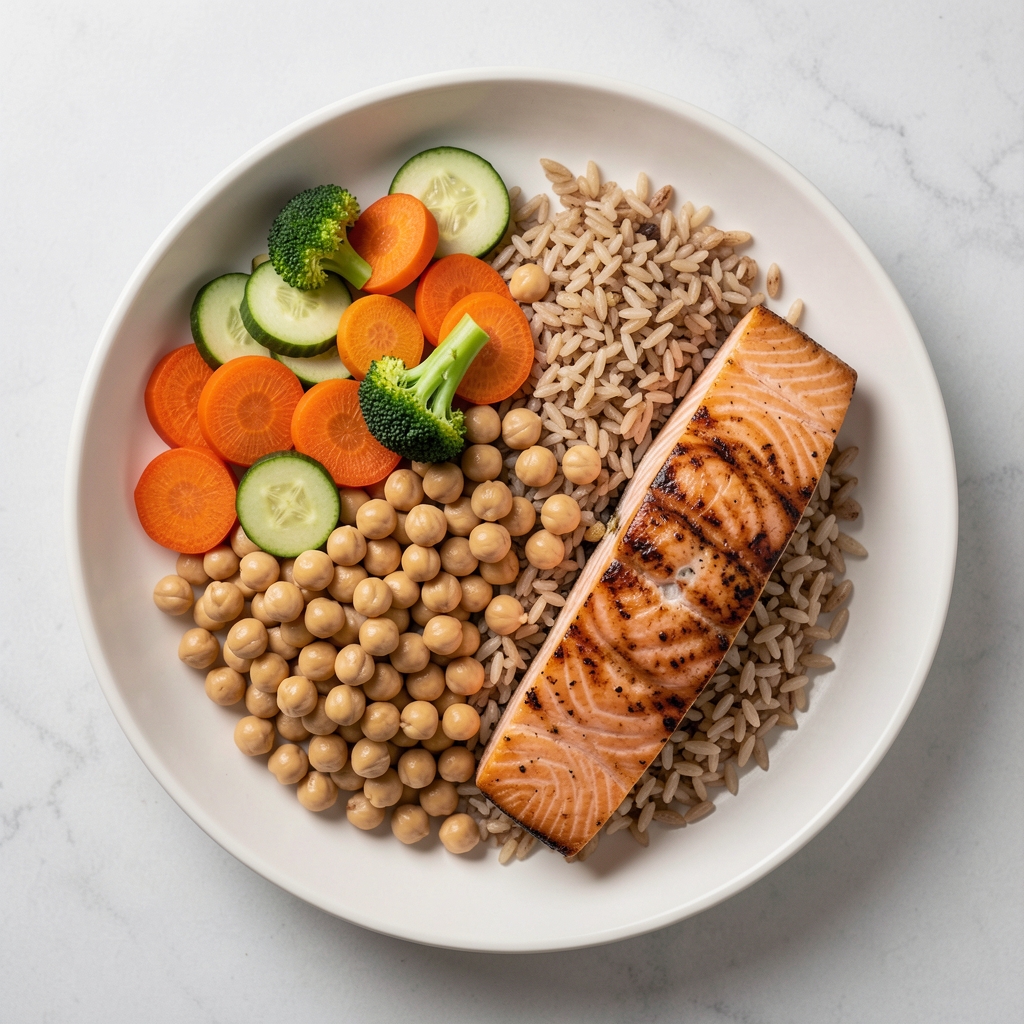
Use proportions as a prompt, not a test.
Three parts to consider
Plants
Vegetables, fruit, pulses and whole grains add colour, texture and fibre. Fresh, frozen and tinned options can all have a place.
Protein
Beans, lentils, eggs, fish, dairy, tofu and meat can contribute protein. Needs vary with age, health and activity.
Fats and flavour
Nuts, seeds, olive oil, herbs and spices can help meals feel enjoyable and complete.

Make it yours
Some days a bowl, sandwich or soup fits better than a carefully divided plate. The useful principle is to notice balance across a day or week, rather than judge one meal in isolation.
“A flexible framework leaves room for appetite, culture, celebration and convenience.”
Small planning prompts
- Choose one vegetable or fruit to add.
- Ask what will make the meal satisfying for longer.
- Keep a convenient staple available for busy days.
- Notice how the meal feels without assigning moral value.